
Raiders
The Raiders are one of the most hostile factions in the Wasteland. Before the apocalypse, they were patients undergoing treatment in a psychiatric hospital, where they struggled with severe mental disorders that caused uncontrollable aggression.
Their treatment was interrupted by the explosion at Human Labs and their subsequent relocation due to the emerging threat.
Their therapy, however, was never destined to reach a successful conclusion.
Raiders on the Map
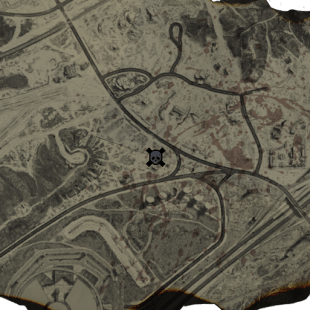
Raiders' Base
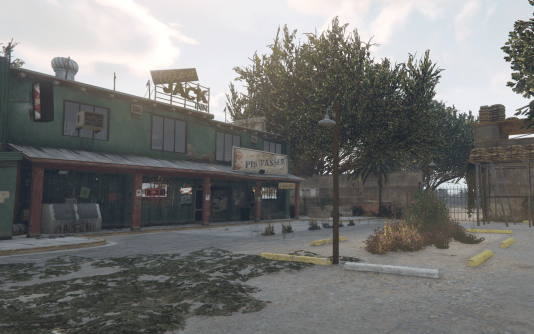
History of the Raiders
The Raiders are a faction whose origins date back to long before the apocalypse.
Most of its future members were patients at a psychiatric hospital, where they were undergoing treatment.
Their lives had never been easy. They suffered from various mental disorders that often resulted in aggression followed by uncontrollable violence.
Although many of the patients had already been receiving treatment for a considerable amount of time — in some cases for several years — the hospital staff were never able to cure the conditions that posed a danger both to the patients themselves and to those around them.
In 2012, when the explosion occurred at Human Labs, the hospital administration decided to relocate all patients to another facility in order to avoid the growing risks.
During the transfer, which was being escorted by military personnel, the convoy encountered a massive horde of zombies and failed to defend itself.
The few lucky survivors who managed to escape quickly grouped together and set out in search of supplies:
food, water, and weapons.
After nearly an entire day on foot, they discovered a small pub by evening.
Voices could be heard coming from inside.
The escaped patients hastily armed themselves with whatever they could find in the backyard — metal pipes, boards covered in nails, and large sharp stones — before storming into the cramped establishment and quickly killing the people inside.
Several of the victims were carrying pistols, while one of the dead had a shotgun.
However, the bar patrons had been caught completely by surprise and were unable to resist the sudden attack.
That same night, the former patients decided to call themselves the Raiders, inspired by their successful first raid in their new life.
Although the Raiders were aggressive, they were far from stupid.
They quickly constructed a sturdy fence around the captured pub using whatever materials they could find, protecting themselves from zombies.
They rarely needed the base, however.
The Raiders were neither noble nor honest.
Most of their time was spent roaming the Wasteland in search of easy prey.
They would seek out groups of survivors and pretend to be weak and peaceful.
The Raiders usually avoided firearms, preferring close-quarters combat instead.
They used conventional melee weapons such as knives, cleavers, and axes taken from the pub, as well as more improvised weapons such as nail-covered bats and thick branches sharpened into spears.
Individuals capable of putting up a respectable fight in hand-to-hand combat were sometimes offered a chance to join their ranks.
Such people were rare, however, and victory in combat was not their only requirement.
The Raiders despised weakness in every possible form.
Within their faction, the concepts of empathy, compassion, and mercy were treated as synonyms for weakness.
Anyone who hesitated even for a fraction of a second during a robbery or murder was immediately sent to meet God.
As time passed and their faction expanded to around twenty members, the Raiders began attacking openly.
They robbed and killed people, and sometimes knocked their victims unconscious and dragged them back to their base to participate in brutal survival fistfights.
The rules of their game were simple:
if the unfortunate captive managed to defeat one of the Raiders, they would supposedly be allowed to leave.
What nobody knew was that fairness was not a quality the Raiders possessed.
They always cheated during these fights.
They used pocket knives, sharp pieces of glass, stones, and other dirty tricks — such as throwing handfuls of sand into an opponent's face — either to disorient them or to inflict potentially fatal injuries.
The faction also began attacking people traveling by car, stealing their vehicles for their own use.
As time went on, the Raiders became increasingly brutal, merciless, and insatiable.
Ordinary, mostly defenseless survivors were no longer enough for them.
They began targeting much larger prizes, such as armed shipments of ammunition and medical supplies.
At first, the Raiders attacked these convoys chaotically.
Not only did they frequently return empty-handed, but they also came back wounded.
Eventually, several of these failed raids cost them the lives of multiple members.
Forced to calm down and recover from their losses, the Raiders began developing actual plans for attacking supply convoys.
Ironically, the relaxation techniques they had learned during treatment for their uncontrollable aggression proved extremely useful.
Back at the psychiatric hospital, whenever the patients became aggressive, doctors would send them to meditation sessions designed to help them control their anger and calm themselves.
The meditation rooms were soundproofed, and the patients would spend hours alone with themselves, learning methods of concentration and the value of patience.
This time, instead of charging blindly into battle, they waited for the right moment.
Roads cluttered with abandoned vehicles worked to the Raiders' advantage.
Military convoys had to move slowly and carefully through difficult sections of the route.
When one such supply convoy was attacked by zombies while passing through a particularly difficult stretch of road, the Raiders made their move.
They shot out the tires of the convoy vehicles, preventing the soldiers from regrouping or escaping.
The Raiders then waited until the following morning, when the number of zombies had decreased to an acceptable level.
Only then did they bring their own vehicles to the convoy.
Part of the faction loaded the military supplies, while the others defended against the remaining zombies.
Fortunately for them, there were no longer many of the creatures left.
The Raiders never stopped launching sudden and spontaneous attacks.
They simply became more careful about how they carried them out.
Despite the psychological help they had once received, ten years of living through the apocalypse and complete lawlessness ultimately took their toll.
Given absolute freedom to act however they pleased, the Raiders surrendered completely to their mental disorders, aggression, and cruelty.
They are driven by a desire to survive, a love of chaos, and the need to demonstrate their power.
The Raiders frequently attack both defenseless and armed people as a way of proving their dominance over others.
Raiding is also their primary source of resources.
Distinguishing Features
The Raiders have several recognizable characteristics.
They usually wear plain, dirty, gray clothing.
Their hair is either cut short or tied back securely, and they often wear masks to protect themselves from sand and dust.
They know the Wasteland extremely well.
Uncontrollable bursts of aggression are common among them, as are conversations with themselves and with the “voices in their heads.”
Unique Traits and Behavior
The Raiders are unstable and extremely aggressive.
They may kidnap people throughout the Wasteland and organize fights to the death.
The second participant in such a fight may be another captive, a member of the Raiders themselves, or even a zombie.
The Raiders may also sell the people they kidnap to the Adepts and the Unitologists.
Behavior type: extremely aggressive.
Interesting Facts
On the first day of the apocalypse, the Raiders attacked the same pub that The Lost had visited earlier that day.
One of the former patients from the psychiatric hospital where the Raiders had once received treatment now lives a relatively isolated but peaceful life.
He even helps survivors who find themselves in trouble.
He left most of his pre-apocalypse life behind, although some things proved impossible to abandon.
One of them was his love of chocolate — a habit he originally developed during treatment for depression.