
Concord
Concord is the faction that leads the Wasteland. Once, its members worked for the good of the city, only to be betrayed and abandoned to die in infected territory. Ever since, Concord has been working to unite all residents of the Wasteland under its leadership in preparation for an uprising.
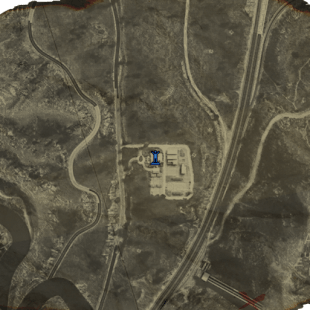
Concord on the Map
Concord's Base
History of Concord
Before the Apocalypse, Concord did not exist as a faction. Its future members were ordinary people, most of whom had never even known each other before the outbreak of the zombie virus.
In July 2014, construction of the Wall separating Los Santos from the so-called Wasteland was completed.
Soon afterward, information began to surface suggesting that far more survivors remained in territories outside the city's control than anyone had previously realized. Some of them were desperately searching for shelter and a safe place to live.
Many of these people repeatedly tried to enter the city.
They came to the checkpoints and waited there for hours, begging the soldiers for help, but the military simply shook their heads and refused.
Their explanation was always the same: allowing them inside the city was too great a risk because they might already be infected.
Even after a rapid test capable of determining a person's level of infection was developed, the survivors were still denied entry into the city.
The people who would eventually become members of Concord were, at that time, ordinary residents of Los Santos from completely different walks of life — from dockworkers to politicians.
They began noticing the strange prejudice directed toward people who wanted nothing more than the chance to live rather than merely survive.
Outraged by such injustice, they began organizing protests outside City Hall.
Months passed.
Over time, the crowd gathered outside the city administration building grew larger and larger, while awareness of the local government's discriminatory treatment spread throughout Los Santos.
Then, in May 2015, the government of Los Santos made a radical decision.
Under the pretense of holding negotiations, officials invited all of the protesters into City Hall.
Once inside, the protesters were drugged and secretly transported beyond the Wall.
The government then told the remaining citizens that both sides had reached a compromise following negotiations: the protesters had supposedly volunteered to travel into the Wasteland, gather information, organize the survivors living beyond the Wall, and determine whether they were infected.
In other words, the local government fabricated a story claiming that everything had been voluntary.
Reality was far more brutal than the version intended for curious ears.
The group of unsuspecting people was simply transported beyond the Wall and abandoned near an old, deserted airfield.
Their fate would most likely have been tragic if not for Old Man Joe and The Lost.
Old Man Joe is something of a local hero.
He has rescued people from situations so dangerous that they are difficult to imagine, although he never does it simply for a “thank you.”
His price is chocolate.
That is the cost of salvation when your rescuer happens to have an incurable sweet tooth.
The Lost are one of the most peaceful factions operating beyond the city.
Although the bikers live a fairly isolated life, they are not hostile toward lost city residents or survivors wandering through the Wasteland.
The bikers offered the helpless group a temporary place to stay at their base.
A problem became apparent shortly after they arrived: there simply was not enough room in the shed where The Lost slept to accommodate everyone.
Fortunately, the summer was warm and the weather allowed them to spend several nights outdoors.
Still, the situation made finding a permanent shelter for the newcomers much more urgent.
Once the group had chosen a leader, they hastily began calling themselves the Minutemen.
It had taken them exactly one minute to choose their leader and rethink their outlook on life in light of their new circumstances.
The leader of The Lost took the newly chosen Minutemen leader with him on a kind of “tour” through the Wasteland in search of suitable territory where the group could settle.
The first week of searching brought no results.
On the eighth day of actively exploring the infected territories, however, the two leaders finally discovered a place where the Minutemen could establish themselves.
It was an old cottage that appeared to have been abandoned for more than five years.
The property was already surrounded by a fence, although the barrier needed considerable repair and reinforcement.
The grounds themselves had long since become overgrown with tall grass and weeds and would need to be cleared before the property could be used comfortably.
From the outside, the house did not look particularly terrible.
The windows were broken and cracks could be seen in several walls, but overall, the building appeared capable of standing for at least another couple of years even without repairs.
Inside, the rooms were dusty and filthy.
Pieces of the ceiling had collapsed, sand and dirt from outside covered parts of the floor, and vegetation had spread throughout certain areas of the building — moss, grass, and even mold.
Cleaning and repairing the cottage would take months.
However, it was well located, and the property was spacious and already nearly suitable for habitation.
Because of this, the leader of the Minutemen decided that they would settle there rather than continue inconveniencing and burdening The Lost.
Within a week, the Minutemen had completely relocated to their new base.
They spent the next six months working tirelessly.
They reinforced the fence, cleared dirt and vegetation from the rooms, repaired old furniture, and built new pieces for the interior.
At the same time, they continued clearing weeds from the surrounding territory and improving the grounds with plants, flowers, bushes, and trees.
Meanwhile, the Minutemen began establishing relationships with the local population.
Thanks to The Lost, rumors about the Wasteland's new residents spread incredibly quickly.
As it turned out, the bikers frequently traveled into the city and had heard a great deal about the people who had been fighting for the rights of those stranded beyond the Wall.
How exactly they managed to enter Los Santos remained a mystery to the Minutemen.
It was clear, however, that they were not using the heavily guarded checkpoints.
The bikers most likely knew of another way to enter the city unnoticed.
This greatly benefited the Minutemen.
Their reputation among the other inhabitants of the Wasteland improved significantly, allowing them to integrate with the local population much more quickly.
It was at this point that they came to an important realization.
Simply surviving was no longer enough.
They wanted to unite the factions of the Wasteland under their leadership against a common enemy:
the city that had abandoned them.
From that moment onward, they stopped calling themselves the Minutemen.
They now had a greater purpose — to become one with the people of the Wasteland.
And so they began calling themselves Concord.
As time passed, Concord learned more and more about the customs, living conditions, secrets, and tricks of survival within the Wasteland.
They also discovered that The Lost had indeed been entering Los Santos illegally.
There was a breach in the Wall.
It had appeared shortly after construction was completed.
Due to careless construction work and unstable soil, the ground had subsided in an area far from populated districts, causing an entire section of the Wall to collapse.
Perhaps because that particular section was so far away from inhabited areas, the construction workers had decided to save time and materials.
Nobody knows for certain.
What mattered was that the factions now had a way to occasionally enter the city.
Previously, The Lost had handled these trips.
They purchased food that was difficult to obtain in the Wasteland, gasoline, sometimes clothing, and various items requested by the local inhabitants.
Over time, however, Concord took over this role in order to strengthen its relationships with other factions.
Whenever they entered the city, Concord members wore masks concealing their faces, baggy clothing, and other items designed to hide their identities.
Concord obtained most of its weapons through trade, usually exchanging them for goods brought back from the city.
Ten years after the beginning of the Apocalypse, Concord had developed a powerful reputation among the inhabitants of the Wasteland.
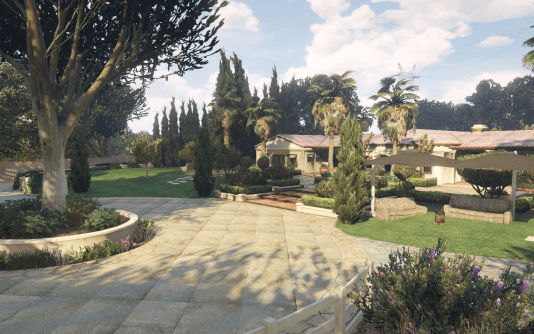
Through years of hard work, their base had been transformed into a comfortable and welcoming place frequently visited by other factions seeking somewhere to rest and relax.
The friendlier Concord became toward the Wasteland, the more hostile its attitude toward the city grew.
The memory of the betrayal that had condemned them to life beyond the Wall had never disappeared.
Distinguishing Features
Concord members can be recognized by their blue clothing and masks that conceal most of their faces, making identification more difficult.
Unique Traits and Behavior
Concord is prohibited from forming alliances with syndicates.
Instead, the faction maintains mutually beneficial relations with all Wasteland factions and is strictly forbidden from going to war with them.
Concord territory is also considered a safe zone and serves as a place where inhabitants of the Wasteland can rest.
Behavior type: aggressive toward city residents, friendly toward Wasteland inhabitants.