
Arrows
The Arrows are the most ruthless and disciplined faction in the entire Wasteland. Thanks to their extensive military experience, they are skilled strategists, but alliances and friendly relations do not interest them.
The Arrows care about one thing above all else: money.
They will gladly help both city residents and the people of the Wasteland — but only for the right price.
Arrows on the Map
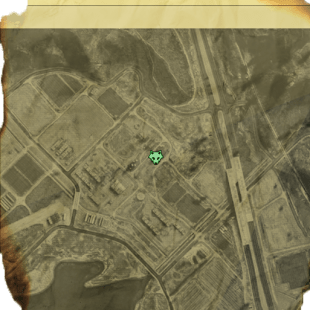
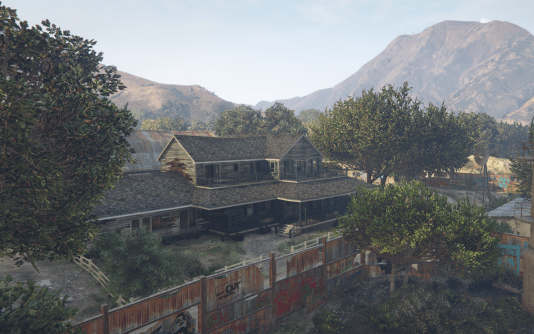
Arrows' Base
History of the Arrows
Skilled and cold-blooded.
People for whom the word “principle” loses all meaning the moment “money” enters the equation.
They were once members of the private military company Arrows.
Now, they are simply the Arrows.
Before the apocalypse, their services were in high demand both in the United States and abroad. They took part in numerous armed conflicts, gaining extensive combat experience and learning how to develop effective military strategies.
The mercenaries spent the end of the summer of 2012 at an old country house in the Grapeseed area that belonged to the unit's commander.
They were resting and recovering after a long deployment during the Battle of Damascus.
The soldiers of fortune planned to remain in Grapeseed until winter, but their plans were shattered by the explosion at Human Labs.
The blast occurred while they were relaxing in the backyard, grilling food and listening to music.
Shortly after the incident, the commander received a call from an old friend in the National Guard with a highly tempting offer.
The payment was substantial enough for the unit to interrupt its vacation for a short time.
The objective was simple:
protect the passage through Lago Zancudo from an armed attack.
According to the information they were given, an attack was expected against a convoy evacuating patients from a psychiatric hospital following the explosion.
No further information was provided.
They were not told how many attackers to expect, what kind of weapons they might possess, or what exactly had happened at Human Labs.
At the time, however, the commander of Arrows saw nothing suspicious about the lack of information.
They had worked alongside the National Guard many times before.
One of the main reasons the government valued them was simple:
they completed their assignments efficiently and did not ask unnecessary questions.
The payment was excellent, and the task itself did not sound particularly difficult, especially considering that the area they were supposed to protect was only a fifteen-minute drive away.
More than an hour remained before the expected start of the mission.
The unit gathered the weapons and equipment they needed and headed toward Lago Zancudo.
They knew the terrain well, so they quickly took up advantageous positions and established a small outpost.
After some time, they finally spotted what appeared to be an escort vehicle approaching.
However, instead of the expected five military vehicles, there was only one.
It swerved violently from side to side before eventually overturning directly beside the outpost.
Several mercenaries rushed toward the vehicle to pull out the injured occupants.
As they attempted to help, a man wearing a military uniform suddenly lunged forward and bit one of them on the arm.
The wounded mercenary knocked the crazed soldier unconscious with the stock of his weapon, tied him up with rope, and quickly bandaged his own wound.
A short time later, a large crowd of people appeared in the distance, running directly toward them.
The closer they came, the more clearly the mercenaries could see them.
None of them appeared to be carrying weapons.
The commander's first thought was that they might be suicide attackers.
But there was something deeply unnatural about the way they moved.
The commander shouted for the crowd to stop.
He waited several seconds before firing a warning shot into the air.
They did not stop.
The commander gave the order to fire to kill.
Although the defensive position had been chosen well, the crowd seemed endless.
The battle lasted only around thirty minutes, yet it was so intense that the unit was quickly pushed close to exhaustion.
The commander slowly approached several of the bodies and examined them.
A cold sweat immediately ran down his back.
The people looked more like animals suffering from rabies.
Their skin had an unnatural yellow-green tone.
Their eyes were cloudy, like those of decomposing corpses.
Some of them even had foam around their mouths.
He had never seen anything like it before.
The commander gestured for his men to get into the vehicles and called his friend in the National Guard.
The man only answered on the third attempt.
When the commander angrily demanded:
“What the hell is going on here?”
the only response he received was:
“You're not being paid to ask questions.”
The call ended immediately afterward.
That evening, while the unit was eating dinner and loudly discussing what had happened, they noticed that the man who had been bitten looked seriously unwell.
His face had become extremely pale.
His eyes were red.
He barely moved.
He simply stared at his steak without blinking, gently swaying from side to side.
Only a couple of minutes passed after the members of Arrows turned their attention toward him before he suddenly let out a threatening growl and lunged at one of his teammates.
They quickly knocked him unconscious by striking him over the head with a chair.
Then they tied him to that same chair.
The members of the unit were deeply disturbed by what was happening.
The commander furiously grabbed his phone and called the same number again.
The ringing seemed to last forever.
Nobody answered.
Not the first time.
Not the second.
Not any of the attempts that followed.
Slowly, the truth began to become clear.
An explosion at a laboratory known in certain circles for conducting inhumane experiments.
A crazed crowd.
Behavior that appeared to be contagious.
Everything looked far too much like the beginning of a zombie apocalypse movie.
Their suspicions were confirmed by a brief news report on television.
The commander immediately decided that the unit would remain at the house until they were evacuated.
Until that happened, the property would become their fortress.
That same evening, they reinforced the fence using every material they could find.
Later that night, two strong members of the unit carried their former teammate into the basement.
Before doing so, they covered every exposed area of their skin with thick fabric and wrapped it in several layers of duct tape for additional protection.
The infected man was no longer their friend.
He was now a threat to the survival of the entire unit.
While one of them held a pillow over the man's head, the other drew a Glock 19 from his holster and fired a bullet directly into his skull.
That same night, they buried him beneath a tree in the backyard.
Two days after the explosion, three military vehicles arrived at the country house.
Among the unexpected visitors was the commander's old friend from the National Guard.
When someone that important personally came to visit, the situation was clearly serious.
He offered the private military company another paid contract.
They would assist the National Guard in protecting the city because the country's leadership had decided to separate San Andreas from the infected territory by constructing a massive Wall.
In return, they would be paid generously.
The commander agreed under one condition:
once construction of the Wall was completed, he and his men would be evacuated inside the city.
The next two years passed this way.
Arrows worked alongside the National Guard, protecting ordinary construction workers from waves of zombies attacking them during the construction of the Wall.
When the final work on the project was completed, the unit was told to wait several days while their evacuation into the city was formally approved.
Several days passed.
Then a week.
Then a month.
No response ever came.
Eventually, they saw no reason to continue waiting.
This became the turning point in their history.
They had been people who worked almost exclusively for the government.
People who had trusted it.
That version of Arrows no longer existed.
Now there were only the Arrows:
people willing to do whatever was necessary to survive.
People willing to help whoever paid the most.
From that moment onward, principles meant nothing to them.
Only personal profit mattered.
What else could anyone expect from a world drowning in the Apocalypse?
Ten years after the explosion at Human Labs, the Arrows still offer their services as highly experienced mercenaries.
However, because of the events they experienced during their survival throughout the Apocalypse, they no longer restrict their services to government organizations.
Distinguishing Features
The Arrows have several recognizable characteristics:
strict military uniforms in khaki colors, neatly tied or carefully styled hair, and frequent use of military expressions and quotations in conversation.
Unique Traits and Behavior
The Arrows are not allowed to form alliances with factions because money always comes first for them.
However, as professional mercenaries, they are permitted to enter into contracts with other organizations — including government agencies.
Behavior type: neutral.
Interesting Facts
Beneath one of the trees at the Arrows' base is the grave of a mercenary who became infected after being bitten during their mission on the first day of the apocalypse.
The Arrows were originally assigned to guard the route that was supposed to be used for the evacuation of psychiatric hospital patients — the people who would later become the Raiders.